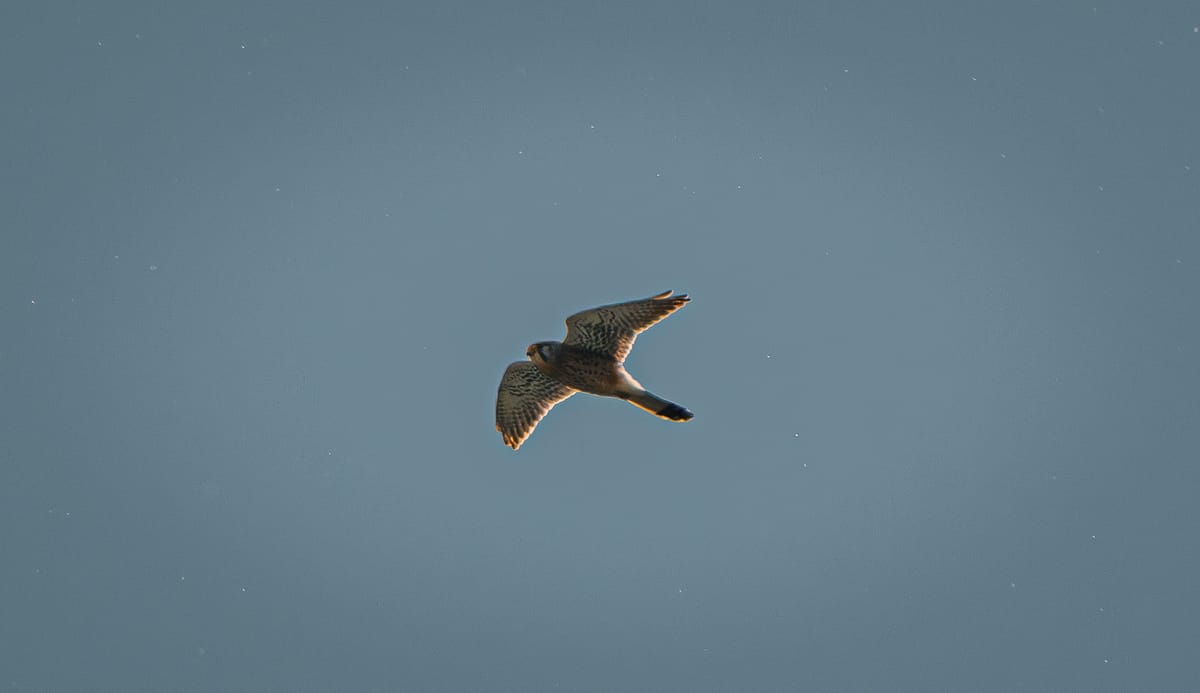
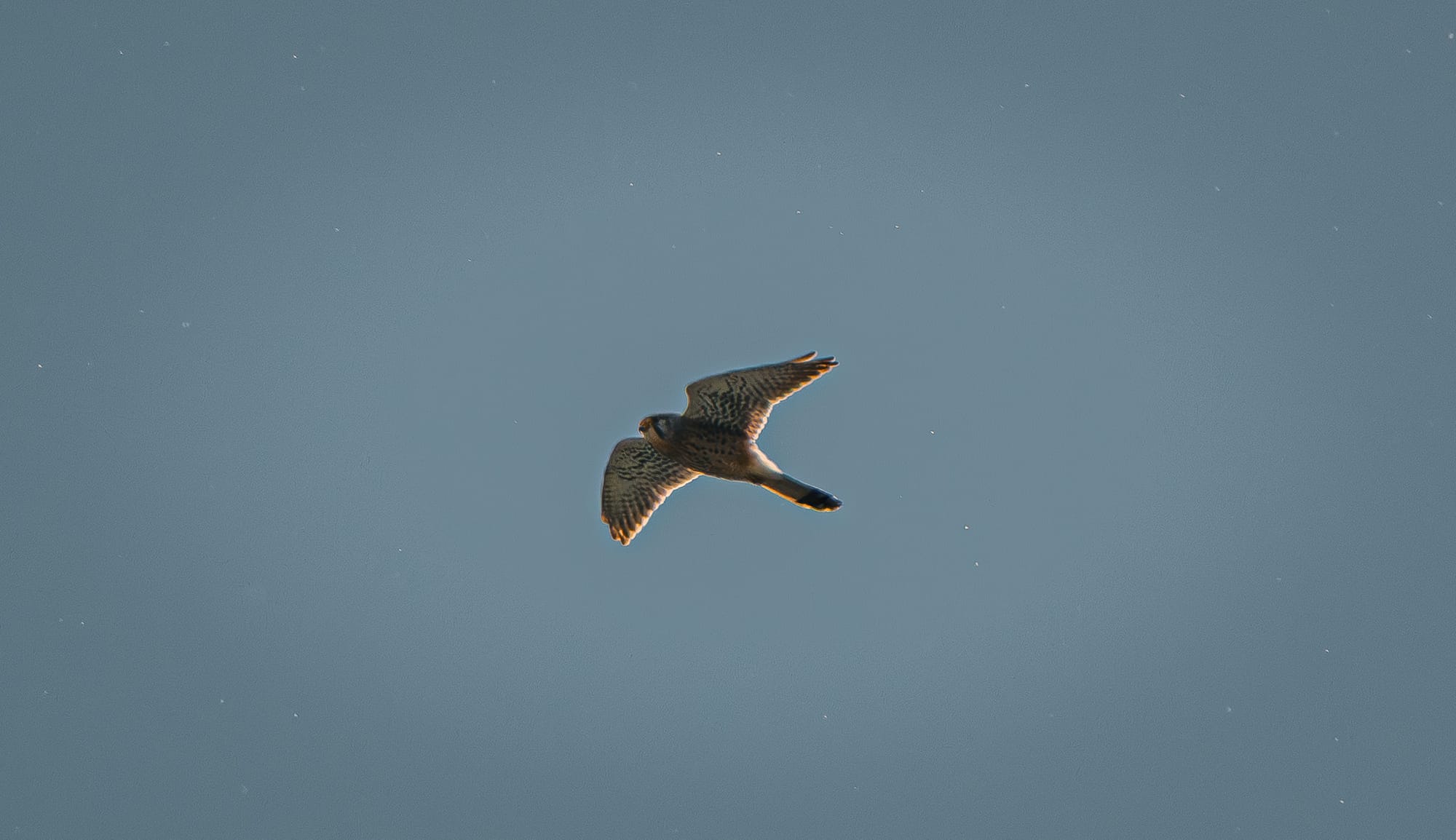
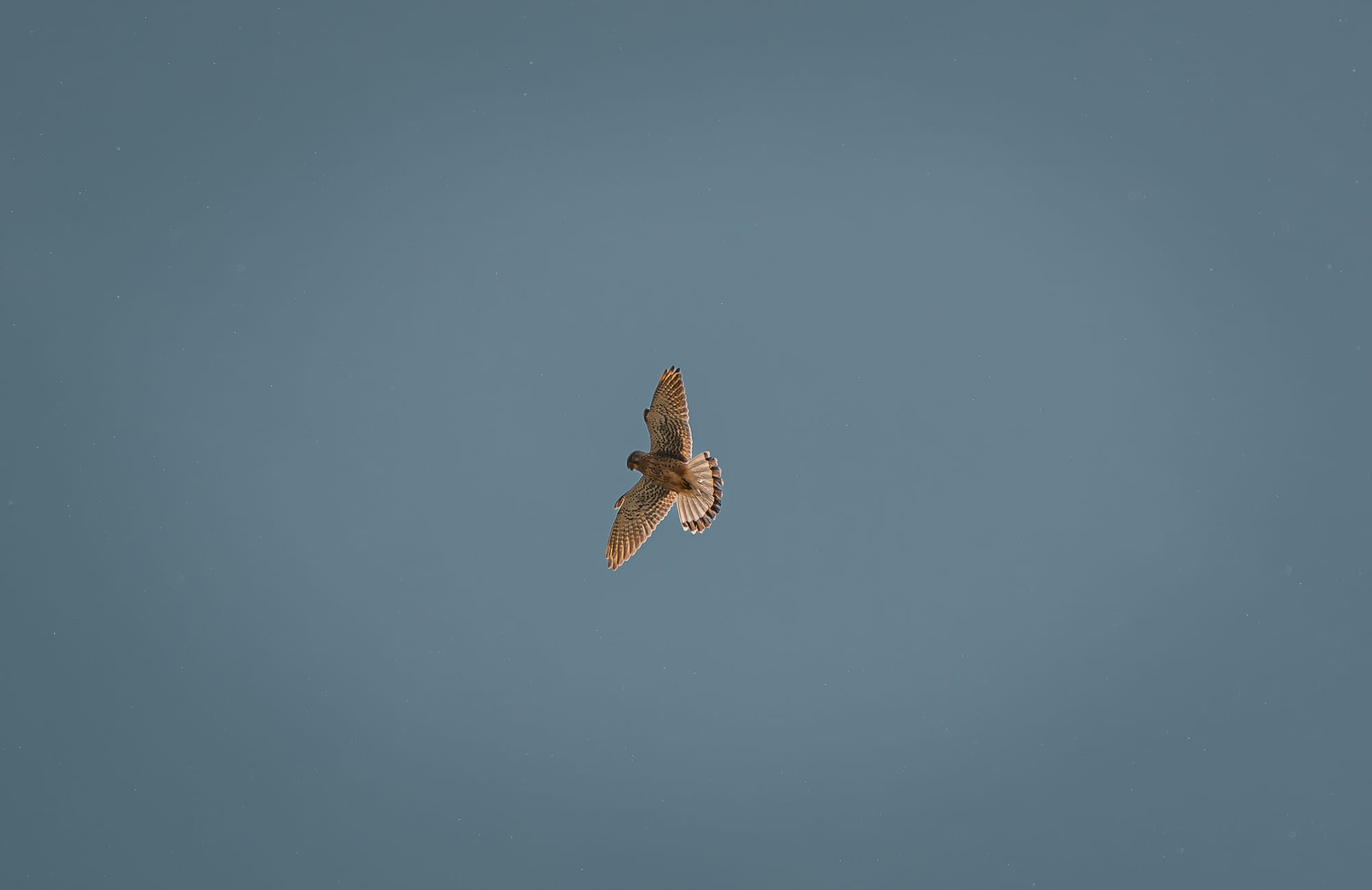
While not the rarest birds, common kestrels, red kites, and buzzards are always a treat to see.
Kestrels are the smallest of the three, with a very characteristic hovering and striking hunting style. They love open meadows where they can spot and catch their prey easily. But even these commonly sighted birds are struggling, facing a massive European population decline of 40–50% since 1980!
To understand why this is happening, we need to understand how they nest. Unlike many other birds, kestrels do not gather twigs, leaves, or grass to construct a nest. Instead, they are “home snatchers” or opportunists. They find existing cavities, ledges, or old nests built by other birds, scrape out a small, shallow depression in the dirt or debris, and lay their eggs directly on the bare surface.
Because of this, many kestrels choose to nest in cities like Vienna, where it is easy to find these nesting spaces. However, once there, finding a steady food source—like voles (tiny mice)—to sustain their young is highly inefficient.
Unfortunately, staying outside of large cities isn't much easier. Their biggest problem in the countryside is also food. As natural fields and meadows are replaced by massive, single-crop industrial farms, kestrels lose both their food supply and their hunting grounds.
What can we do?
As individuals who do not farm, our power isn’t in turning the soil ourselves—it is in shaping the rules of the game. Governments and farmers operate as businesses; they do what is economically survival-friendly. If policies pay them to destroy the soil, they will; if policies pay them to protect it (and sustain birds like the kestrel), they will transition.
If we want to save our iconic birds of prey, we have to look underground. Intensive farming treatments—like massive monocultures, heavy tractor compaction, and chemical sprays—leave the soil biologically dead.
No soil life means no insects. No insects means no rodents. No rodents means empty skies.
We must force our governments to support a transition to wildlife-friendly, organic farming. Here is a vital petition you can sign today to help kickstart this transition:
🇦🇹 For Austria: Stop Ecosystem Poisoning (Takes 30 seconds)
Run by Greenpeace Austria, this campaign demands a swift political ban on toxic pesticides and immediate funding to help farmers transition to organic, soil-friendly methods.